×
  • News
  • Reviews
  • Guides
  • Features
  • Videos
  • News
  • Reviews
  • Guides
  • Features
  • Videos
Log in / Register
REVIEW

Sword Art Online: Lost Song Review

by Rob Pritchard, December 11th, 2015
  • Sword Art Online: Lost Song
  • Reviews
  • News & Features
  • Guides
  • Sword Art Online: Lost Song
  • Reviews
  • News & Features

Immersion is arguably becoming one of the hotter topics in the game industry, especially with several VR platforms launching next year. The first two Sword Art Online games took this to the next level, as the protagonists of the story could not leave the Virtual Reality MMO they were playing until they had beaten the game. The latest entry, Sword Art Online: Lost Song breaks away from the world that had imprisoned them, and while it borrows from the previous instalment Hollow Fragment, several things have changed.

Lost Song takes place sometime after the escape from Sword Art Online, in which one of the survivors named Kirito expresses an interesting in playing ALFheim Online, a Virtual Reality MMO that is a modified clone of SAO. The story begins just after the game has been upgraded to its first major expansion named Svart ALFheim. Along with several of his online friends, who have also migrated to ALFheim, Kirito wants to explore the newly created areas, but discovers a guild with dark secrets, who threaten the relative safety of ALFheim Online.

The narrative of Lost Song has some very interesting scenarios, such as the flashbacks to the traumatic experiences that Kirito and his online friends suffered in previous online world, and the discovery that not everything in the cloned world is free from the originals corruption. Instead of focusing entirely on the personae that they have created for themselves in world, the main characters talk about their real life outside of the game. With this exposition, you gain a broader picture of each of the potential party member, and learn their strengths and weaknesses as a result. The new areas included in this expansion are floating continents, and each of them is based upon a particular elemental theme, such as a nature covered area name Vorklinde and a dark world that goes by the name of Niflheim. Each new place that you visit has a selection of local landmarks, such as the windmills that populate the grasslands, and the picturesque stone entrances to some of the dungeons.
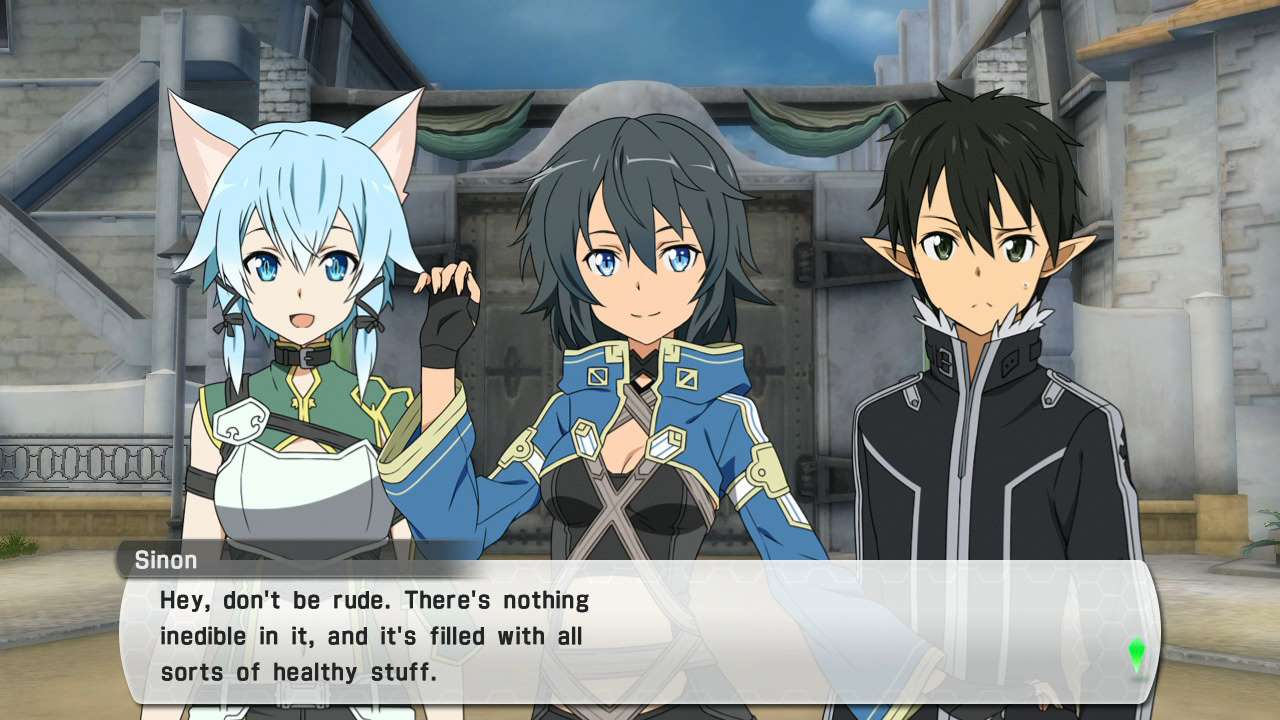
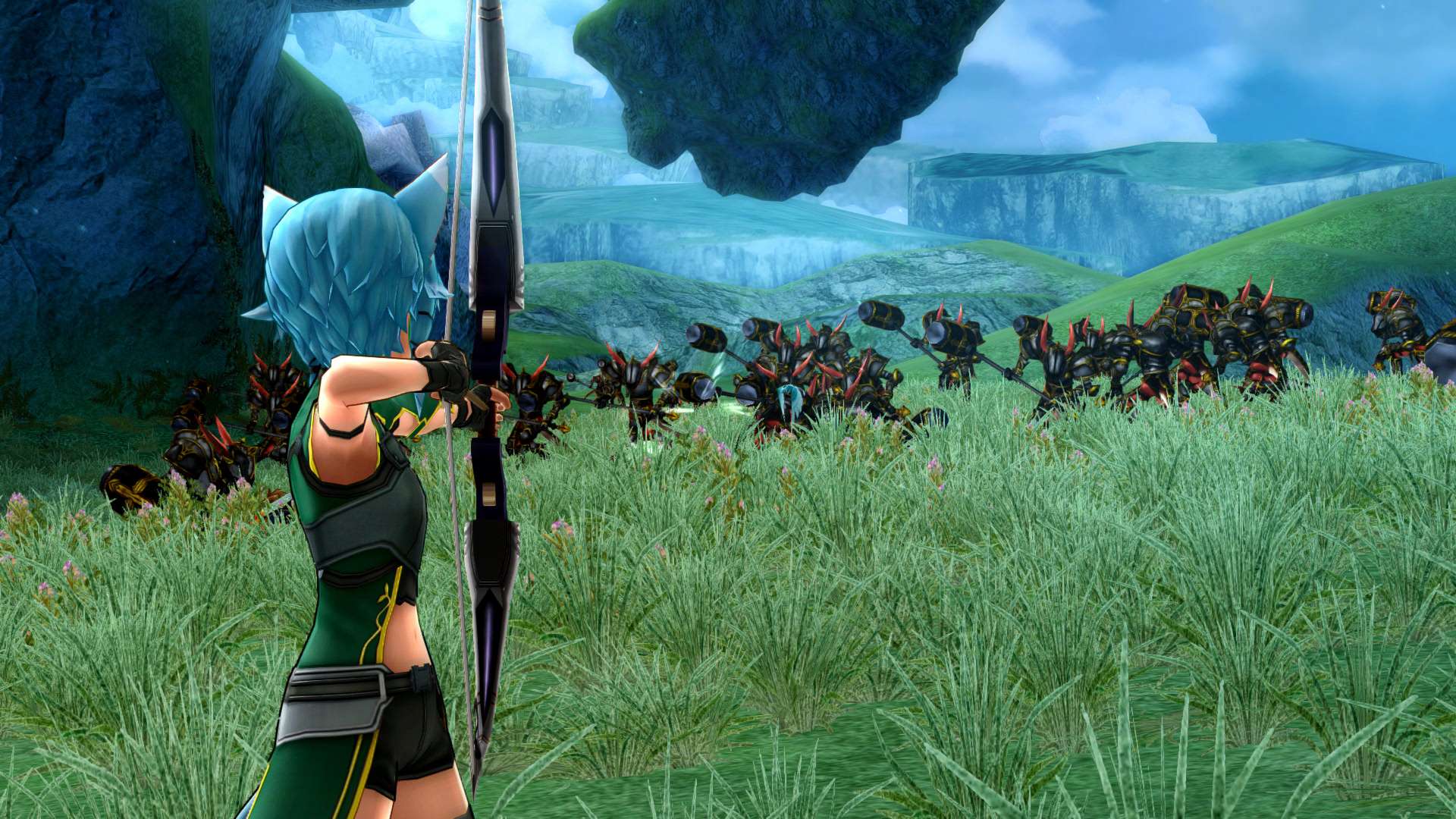
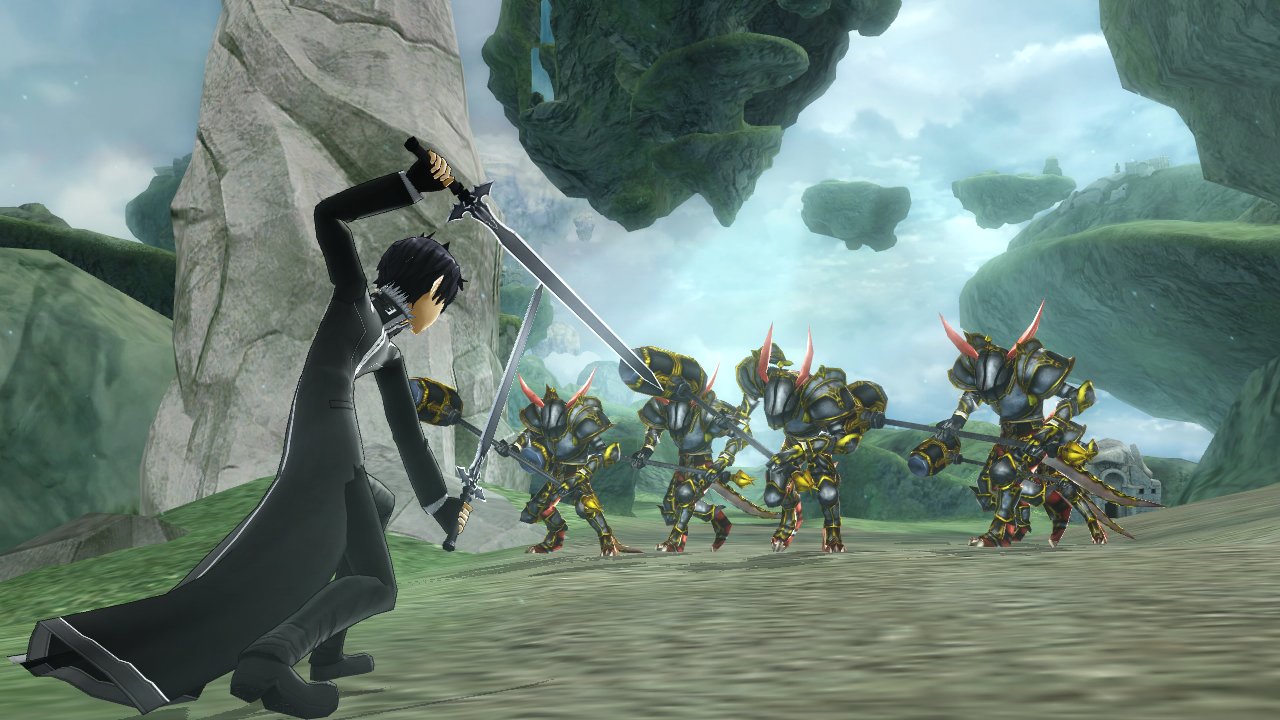
Graphically, Sword Art Online: Lost Song uses a combination of anime portraits and cel shaded characters and backgrounds outside of the dialogue interface. The fantasy world thrives with this choice, making the enemies and locations seem bright and full of life. The user interface is minimal, with only a mini map and textual notifications popping up to notify of a chance in statistics, or if an item or special ability has been used by an ally. Although Long Song shares a lot of design choices with the MMO genre, it is good to see they have not included the barrage of icons that appear in open world adventures such as World of Warcraft and Guild Wars 2.

A mixture of electronica and orchestral music accompanies your journeys through ALFheim Online, with a definite highlight being the middle ages style background track in the guild offices. A fairly stereotypical J-POP theme accompanies the intro, but the way that it sets the tone for the journey ahead makes it worth listening to. If you are looking for an English dub for character dialogue in Lost Song, then you will slightly disappointed, as there is only a Japanese language track included.

The bare bones of Lost Song’s gameplay follows the standard trial of completing fetch quests and dungeon areas, attempting any side missions that come your way and conversing with your party members. Although this a solid foundation and they are done well, there is a distinct lack of variety in mission types after the first few chapters, which can make playing for long periods of time seem like a chore. The ground based movement from the first two games has returned, but now it is possible to take to the skies as Kirito and his friends avatars are fairies. With the press of a directional button, you can take off anywhere in the over world. The flying mechanics are completely disabled inside town areas and dungeons, which is understandable given the limited amount of ground you can cover. The aerial manoeuvring is a fun addition, especially when you need to escape from strong enemies or cover a lot of ground and it is easy to control using the left and right analog sticks. The camera is also moved using these controls, and for the most part you are able to see everything you need in battle. There are a few occasions where it becomes stuck behind the scenery, but this only happens when you are in enclosed spaces, such as the dungeons.

The main disadvantage of the flight mode is that aerial combat is a little disjointed, with at least two seconds taking place between an attack and the ability to move and perform another action. These tank style controls result in several problems, especially when a group of enemies swarm you out of nowhere, and you are only able to attack one at a time. Certain skills can help to lessen the effect, but for anyone who is used to a fluid set of attack animations, it is possible that you will become easily frustrated.

What makes Sword Art Online: Lost Song different from most mainstream RPG’s, is that you do not have direct control over your party. Between quests, it is possible to choose which character you want to control, and two allies that will be your backup. This customisation allows for some really creative combinations, and each characters strengths and weaknesses add a layer of complexity to the game. It is possible to alter their artificial intelligence to a degree, but for the most part they are acting under their own volition. During battles, this means that you only have to focus on the character you have chosen as the leader, rather than having to juggle with three characters to ensure their survival in battle. In this way, the party system is very similar to the original Kingdom Hearts, which utilised computer controlled non playable characters to support your active time battles with attacks and magic spells.

There were very few problems with this set up, but what lets Sword Art Online down is the lack of additional mechanics outside of the magic spells, interchangeable characters and flight.

Overall, Sword Art Online: Lost Song is an interesting role playing adventure. While there are a few flaws in the quests and the battle system whilst in flight mode, the self aware story scenarios and slick graphical style are well worth investing your time in, especially when you get to the later chapters of the game. Most RPG fans will find something to like with this pseudo MMOG, but if you are a fan of the original anime, Lost Song will certainly take your fancy with its portrayal of fan favourite characters.

6
While it does have some rough edges, Sword Art Online: Lost Song is a fun action RPG with plenty for fans of the series to enjoy, as well as new players who are looking for a unique adventure with a robust narrative.

Filed under: japanese Lost Song MMOG RPG sword art online Sword Art Online: Lost Song

The Outer Worlds Gets Switch Release Date, June 5th + Day One Patch
Oninaki Review
GreedFall Gets Release Date and Trailer
A look into Warhammer Fantasy Roleplay: Starter Set
The Game Awards
5 Games That Could Be Announced At The Game Awards 2018
Labyrinth of Refrain: Coven of Dusk Review
Divinity: Original Sin II – Definitive Edition Review
Code Vein Release Date Announced, Plus Collector’s Edition Explained
ELEX Review
Powered by Magic
  • VGU
  • Platforms
  • Features
  • Reviews
  • Games

© 2025 VGU.

Insert/edit link

Enter the destination URL

Or link to existing content

    No search term specified. Showing recent items. Search or use up and down arrow keys to select an item.