×
  • News
  • Reviews
  • Guides
  • Features
  • Videos
  • News
  • Reviews
  • Guides
  • Features
  • Videos
Log in / Register
REVIEW

Tokyo Mirage Sessions #FE Review

by Rob Pritchard, August 4th, 2016
  • Tokyo Mirage Sessions #FE
  • Reviews
  • News & Features
  • Guides
  • Tokyo Mirage Sessions #FE
  • Reviews
  • News & Features

Crossover video games are often treated with suspicion, especially when the intellectual properties that make the connection are well respected. Back in 2010, a project was announced that would bring together ATLUS’s flagship Shin Megami Tensei franchise, and Intelligent Systems Fire Emblem series.  The end result of this collaboration was finally released in June 2016 as Tokyo Mirage Sessions #FE for the Wii U. While it is not the game that hardcore fans of both franchises might have expected to see, Tokyo Mirage Sessions #FE is one of the more unique role playing games to come out this year, and certainly proves that there is more to the Wii U than just Nintendo’s first party catalogue.

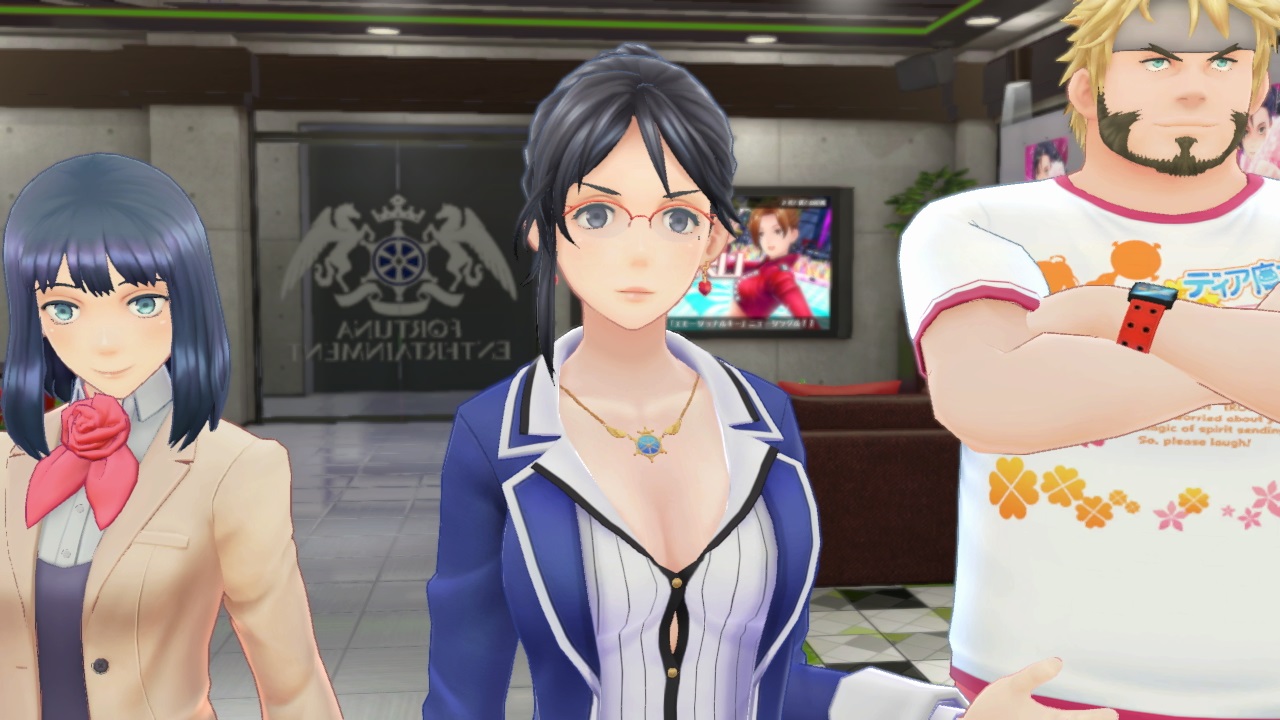
Tokyo Mirage Sessions #FE takes place in modern day Tokyo, where a young woman named Tsubasa dreams of becoming an idol. On the day of her audition, she is kidnapped by a mysterious force. The protagonist, a young man named Itsuki goes to rescue her, and along the way he forms a bond with a mysterious being known as a Mirage. After they have escaped, they are recruited by an idol agency that secretly fights the rogue Mirages that are beginning to possess people in the real world. Their primary goal is steal their Performa, another name for the creative energies of mankind, for their own gains. Throughout the main storyline, there are several moments which are too cute for their own good. Despite the sometimes farfetched plot, the characters and their relationships are completely believable, such as Tsubasa’s tendency to misspeak her worlds when nervous, and the way that the shy Kiria relies on Itsuki for emotional support.

If you have ever played a game from the Persona series, then the game play structure of Tokyo Mirage Sessions #FE will be very familiar. Throughout the game, you help Tsubasa to try and become a professional idol as part of the main storyline, defend Tokyo from the invading Mirages in dungeon areas and take part in Side Stories with additional characters and party members. Although you are not restricted by a calendar system known in the Persona franchise, you cannot perform side stories whilst taking part in the main game, so you will need to use free time sections known as Intermissions  which are provided between chapters. Although the idol focused storyline is fairly simple with how it follows the monster of the week routine showed in many TV shows, the way in which they are kept separate from the side stories ensures that every player will receive the same core experience, and will be rewarded with a story of Tsubasa’s confidence issues, or Touma’s desire to become a hero if they decide to divert from the status quo.
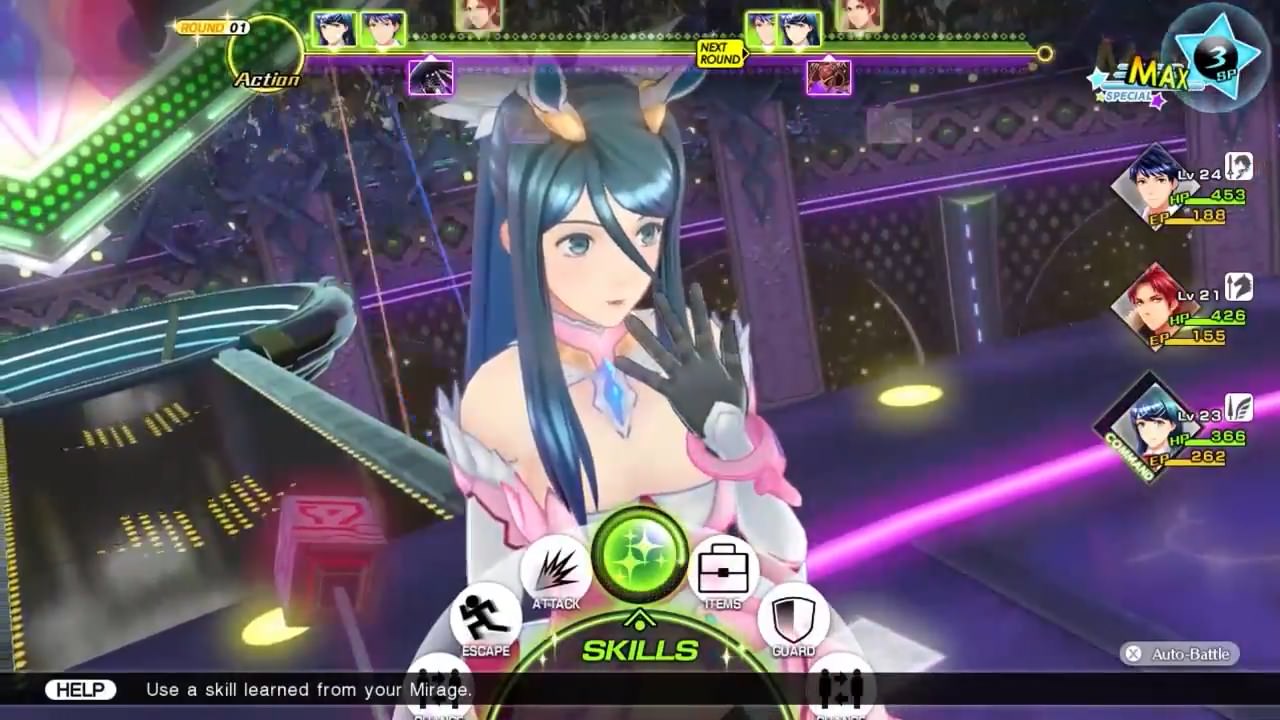
At the middle point of each chapter, a portal to a new dungeon will open up somewhere in Tokyo. These dungeons are set in a parallel world known as the Idolosphere, where Mirages have mysteriously appeared to drain the Performa from unsuspecting humans who wander inside. Each area is themed around a unique particular part of the idol industry such as singing and photography, which prevents the dungeons from appearing stale after multiple floors like Tartarus in Persona 3. Several shortcuts and traps are also built in the Idolosphere such as the dress tunnels which lead you to specific floors, and the floors which decrease your health if stepped upon. One of the best areas to demonstrate these trap mechanics is the parallel Shibuya. If you are caught on film by one of the stationary cameras, you will be forced to return to an earlier area of the dungeon. Although it may be frustrating at first, this is a good way of providing a puzzle to solve, without distracting the player from their primary objective.

The battle system of Tokyo Mirage Sessions #FE is both engaging and inventive. Each Mirage can resist attacks from particular elements or weapon types, but it also has a weakness which can be exploited at your leisure. These weaknesses use both the standard Shin Megami Tensei elements table, as well as the triangle weapon system from Fire Emblem. Knocking down an enemy in this way will allow you to perform a sequence of extra attacks known as a Session, providing that you have members in your party with attacks of the same type. For example, if you attack using an electric based skill, and your allies have an electric attack in their arsenal, they will use that move to assist you in battle. Like in the Persona series, enemies can also exploit your weaknesses in this manner, which gives each battle an element of risk that many role playing games do not implement. Along with the vast variety of enemies you can encounter, these quirks make each battle feel like a different experience each time you play.

As you defeat the enemies around you, you will gain experience for your characters, as well the current weapon that you have equipped. It is also possible for the Mirages to drop special items such as healing items and pieces of your opponents, which can be fused together along with special Performa earned during the game to create new weapons through a process called Carnage Unity. This system can also allow you to obtain increased stats, or specialised abilities through a system known as Radiant Unity. These abilities can grant optional bonuses to your party such as the chance to keep a disposable item after use, or increase the chance of using a Special Performance, a randomised move that causes a large amount of damage to every enemy in the battle. The two Unity systems are almost entirely optional, apart from some that are required to progress the narrative, but the additional bonuses are definitely worth investing in for strengthening your party and making battles easier past the initial chapters.

It would be fair to say that most of the battle mechanics and game play are taken from the Shin Megami Tensei side of the partnership, but this does not mean that the Fire Emblem pieces of the puzzle are any less significant. Many of the larger enemy Mirages that you face at the end of a chapter, and the Mirages that the party team up with battle are based on a character from the series, such as Chrom from Fire Emblem Awakening and Lorenz from Fire Emblem: Shadow Dragon. One thing which has been carried over from both franchises is the higher than average difficulty level, which can vary from relatively moderate to intensely difficult in a matter of moments. A word of warning, be sure to save before you come to an area with a powerful enemy. I cannot count the number of times I was forced to replay several hours of gameplay because of a boss that is ten levels higher than the party’s average.

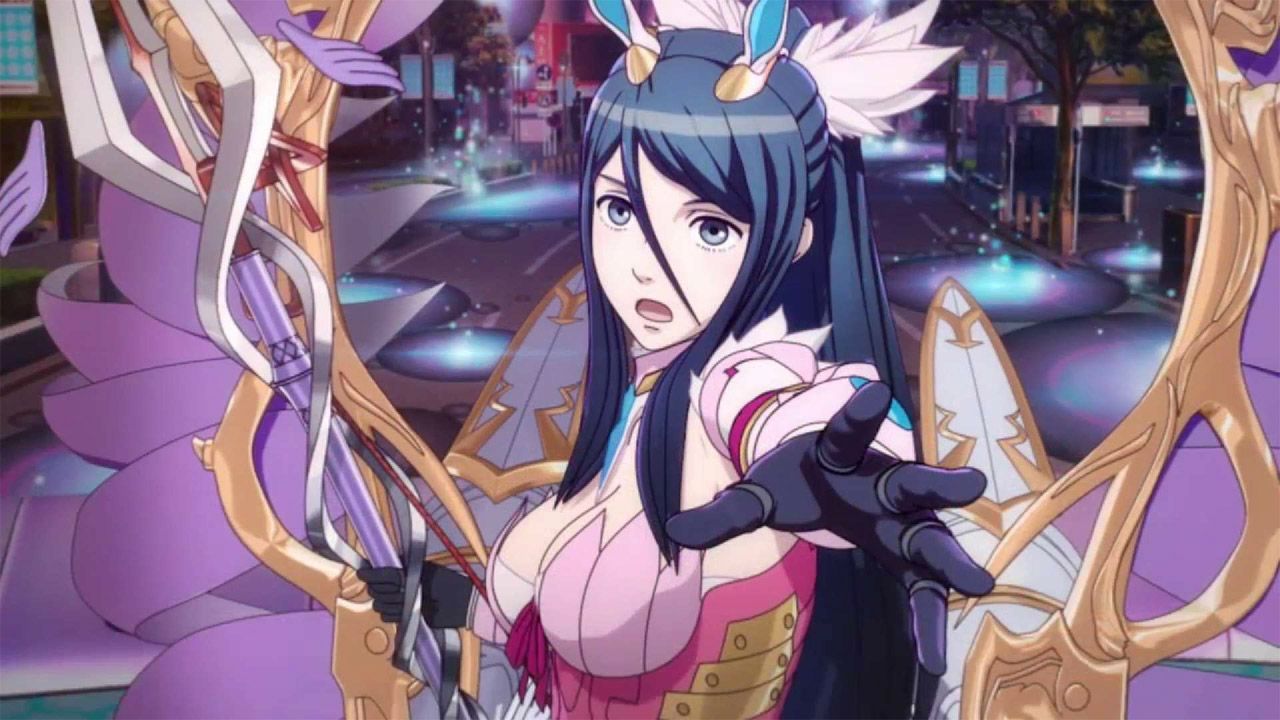
From a graphical perspective, Tokyo Mirage Sessions #FE uses a cel shaded style which has served Atlus well in previous titles such as Catherine and Persona 4 Golden. The vibrant colourful visuals are present all throughout the game, particularly in the anime cut scenes, the majority of which are essentially music videos for the character’s musical performances. Although the text of the game has been entirely translated to English, the same cannot be said of the in game dialogue, which remains in its native Japanese. In the case of Tokyo Mirage Sessions #FE, this is the right decision; as the voice artists for the main characters perform their singing and speaking voice. This could have made finding English voice actors difficult and spoil the atmosphere of the game, so Atlus confirmed in an interview that no English dub would be included. The music in Tokyo Mirage Sessions #FE is wonderfully charismatic, fitting the JPop idol theme that Atlus have aimed to achieve. One of the particular highlights is the main title song Reincarnation, which injects the perfect start to a drama filled adventure.

Overall Tokyo Mirage Sessions #FE is one of the best RPG experiences you can get on the Wii U. It’s vibrant colour scheme, energy filled JPop soundtrack and challenging gameplay offer a refreshing change from the serious role playing games that have dominated the industry. Although some fans of Shin Megami Tensei and Fire Emblem will complain that it may be too saccharine for their tastes, if you need another reason to buy Nintendo’s underrated console, this is certainly a game that will help tip the balance in your favour.

9
With it's addictive gameplay, an astounding JPop soundtrack and charming characters, this is another Atlus classic to add to your collection. If you have been waiting for another classic JRPG to come to the Wii U, Tokyo Mirage Sessions #FE will definitely satisfy your gaming appetite.

Filed under: Atlus Nintendo Tokyo Mirage Sessions #FE wii u

Persona 5 Royal
Persona 5 Royal Meet The Phantom Thieves Trailer Revealed By Atlus
Persona 5 The Royal
Persona 5 The Royal PV 02 Trailer Revealed By Atlus
Nintendo Switch Lite Details Revealed
Persona 5 Royal
E3 2019: First English Dubbed Trailer For Persona 5 Royal Released By Atlus
Yoshi's Crafted World
Yoshi’s Crafted World Review
The Caligula Effect Overdose Review
The Game Awards
5 Games That Could Be Announced At The Game Awards 2018
Dark Souls Remastered Release Date For Nintendo Switch
E3: 2018 What we can expect from Super Smash Bros Ultimate
Powered by Magic
  • VGU
  • Platforms
  • Features
  • Reviews
  • Games

© 2025 VGU.

Insert/edit link

Enter the destination URL

Or link to existing content

    No search term specified. Showing recent items. Search or use up and down arrow keys to select an item.