×
  • News
  • Reviews
  • Guides
  • Features
  • Videos
  • News
  • Reviews
  • Guides
  • Features
  • Videos
Log in / Register
REVIEW

Tangledeep Review

by Jake Stewart, February 8th, 2018
  • Tangledeep Review
  • Reviews
  • News & Features
  • Guides
  • Tangledeep Review
  • Reviews
  • News & Features

Indie throwbacks to the NES, SNES or even the N64 era have become extremely common, so much so that it has become extremely difficult to break out within the marketplace and stand out from the other ones. However, I think Tangledeep has the potential to do just that.

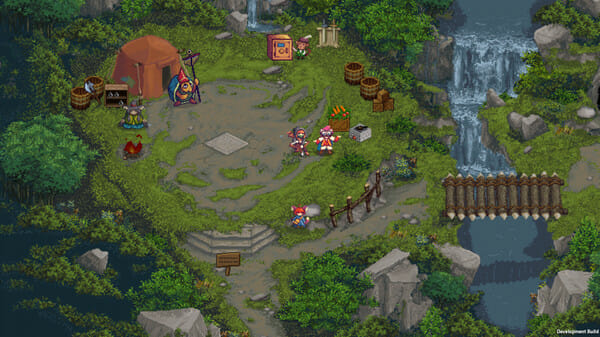
You take up the role of an aspiring adventurer who has spent their entire life living in an underground village. The only way up to the surface is through a labyrinth known as Tangledeep. Terrifying monsters and bandits litter the way through, and only the bravest of adventurers take on the challenge.

The first and most notable thing about Tangledeep is the presentation. A gorgeous color palette, well-designed pixel art, and stylish scan lines make for fantastic visuals. The Secret of Mana influence is very apparent in Tangledeep’s aesthetic, but it still brings enough to the table to look original. Every character playable or otherwise looks and feels unique to one another, and fits the theme that Tangledeep has created very well. Along with the visuals comes an amazing soundtrack. After the first song in the first location played, I was already on the Steam store checking if I could purchase the soundtrack on its own. From relaxing melodies to exciting fight jams, every part of Tangledeep’s OST captures the mood.
 

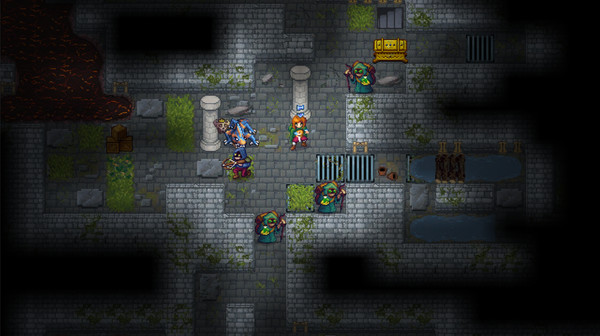
In true roguelike fashion, the floors are randomized with different exits and enemy spawns to spice up each adventure. While the progression of the dungeon is the same, you can expect slightly different layouts through each playthrough. Each level consists of navigating the floor and searching for the next staircase up. Items scattered across all the far corners of the map and the upcoming difficulty spikes made for great motivation to take my time with each floor rather just sprinting through to get to the next one.

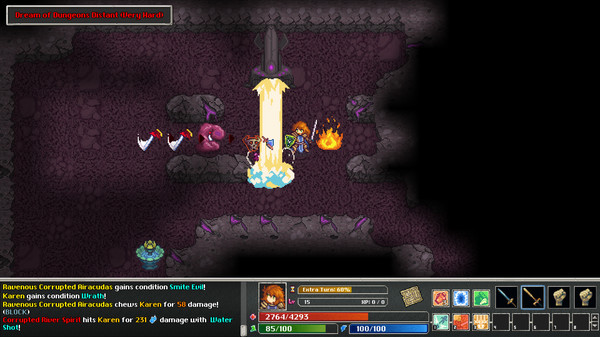
The most unique thing about Tangledeep comes in the form of its combat system, and subsequently its movement. Every floor is placed upon a grid, and every move you make on there is considered a turn. So as you move, the enemies around you move, and when you stop, they stop. This encourages the player to constantly assess their situation and find the best way to go about something, rather than just blundering through every encounter. Your character is given three main ways of attack, melee, ranged and abilities. Melee and ranged are fairly self-explanatory, as your character will switch between the two depending on proximity to enemies, but the abilities can often mean life or death in a situation.

The abilities that you are able to learn is determined by the job class you pick when creating your character. From paladins, to thieves and mages, there is a class for any type of fantasy trope. In my usual fashion, I mostly stuck with the paladin character. The abilities attached to your character can range from defense boosts, supercharged attacks, larger multiple tile attacks, etc. These abilities are also set to a cooldown that pass as you take turns. Each playable class has their own variation on how these abilities perform, but fundamentally are very similar. These classes are ranked with levels of difficulty based on how the class plays. The higher the difficulty requires more strategy to land effective moves, but will generally do much higher damage when mastered.


Everything about Tangledeep’s combat encourages slow and precise strategies. Even when using food or your healing flask to heal, very rarely will the effect be instant. This requires you to think on your toes and predict what may come ahead, and to decide when is the best time to take a swig of your flask. In a normal combat situation, you’ll need to constantly be assessing your health, abilities, range, and all the different cooldowns that come with each. This can initially feel overwhelming, but as you progress it becomes second-nature to monitor all these different values during combat.

For the first five levels, the difficulty slowly ramps up into challenging, before meeting with your first boss that can often prove to put up quite the fight. Up until this stage, the difficulty curve has felt very natural, and as long as you spent a moderate amount of time on each floor, it’s unlikely that you’d be under-leveled. But immediately after this fight comes a MASSIVE difficulty curve out of nowhere. Basic monsters are putting up more of a fight than the boss was, coming in waves almost double than floors in the past, and swarming your character. In a game that features permadeath, it can be extremely frustrating to lose all of your progress to a difficulty spike that has almost no communication of its arrival. Even after spending some time grinding on the lower floors, the floors after the first boss can seem almost unreasonably difficult. While some players may welcome this challenge with open arms, the lack of communication and the abrupt shift in difficulty left an overly sour taste in my mouth.


When hung up on an area that is particularly difficult, the game promotes going into an item dungeon to improve the effectiveness of your weapons and armor. These item dungeons are smaller randomized dungeons that can be used to grind for EXP, items, and upgrades to your current arsenal. Their inclusion is certainly unique, and can be a much needed deviation from the difficulty found in the Tangledeep dungeon.

For the most part, bugs were few and far between, and often didn’t make much of a lasting impact on the game. I experienced a crash once after losing to the first boss, and an encountered a few times where I was forced to exit and reenter an area in order to trigger an NPC to engage with me. Otherwise, combat, equipment, and all other aspects of the game felt very polished and bug-free.

Overall, Tangledeep could be considered another one of the standard roguelike indie titles that have been landing on the marketplace lately, but it has a lot to offer that makes it unique. The presentation is absolutely stellar, the soundtrack and visuals alone make it one of the most memorable games in the genre. Despite the massive difficulty spike, the combat can be very enjoyable as well. The open-movement turn-based style does wonders for making Tangledeep stand out, and offers an easy to learn but hard to master strategic experience. If you enjoyed games from the SNES era, roguelikes, or very difficult games, you’ll find something great within Tangledeep.

8
Tangledeep is a fantastic and unique throwback to the SNES-era, but brings enough to the table to be more than an homage.

Powered by Magic
  • VGU
  • Platforms
  • Features
  • Reviews
  • Games

© 2025 VGU.

Insert/edit link

Enter the destination URL

Or link to existing content

    No search term specified. Showing recent items. Search or use up and down arrow keys to select an item.