×
  • News
  • Reviews
  • Guides
  • Features
  • Videos
  • News
  • Reviews
  • Guides
  • Features
  • Videos
Log in / Register
REVIEW

The Longest Five Minutes Review

by Jake Stewart, February 17th, 2018
  • The Longest Five Minutes Review
  • Reviews
  • News & Features
  • Guides
  • The Longest Five Minutes Review
  • Reviews
  • News & Features

The JRPG genre has been around nearly as long as gaming itself. It seems that every possible mechanic, trope and storyline has been bled dry. However, every once in awhile, a game comes around that tries to do something completely different, with all the good and bad aspects that comes with the change. The Longest Five Minutes is certainly one of those unique games.

Instead of starting your quest in a hometown, preparing for the adventure ahead. The game starts you at the final boss, The Demon King. Unfortunately, during the fight your hero loses all of his memories, and doesn’t remember who his party is or why they are fighting. The rest of the game follows your hero, Flash Back (Ha. Ha.), recollecting on the events that led him to the final boss.
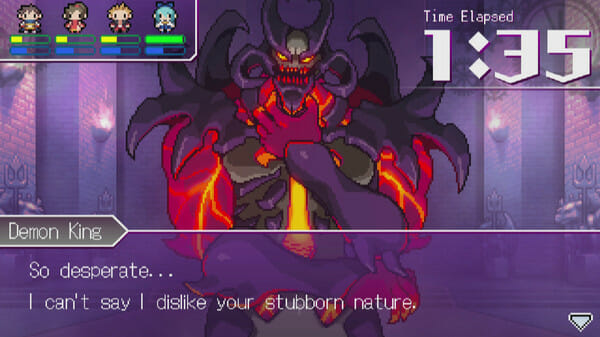
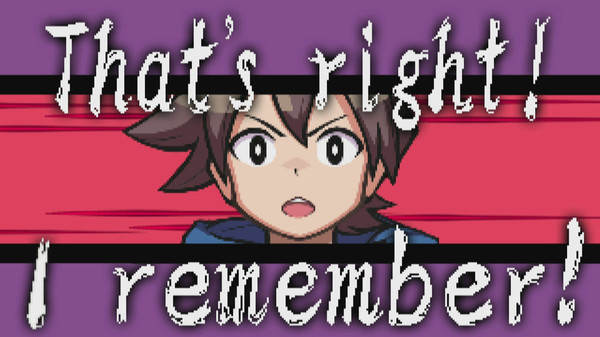


While you recollect on your memories, you will be forced to make decisions during the boss fight that will affect how the previous memories play out. As you battle the Demon King, a stopwatch is ticking at the top, signifying how much time in-game has passed as you remember the previous events. These events take the form of memories, in which Flash will remember certain experiences, often not in order.

Once you begin a memory, the JRPG portion of the game sets in, but in a very basic way. As mentioned, your memories take place out of order. So any items, gold and EXP collected won’t matter in the slightest, as they will essentially all reset at the end of a chapter. You have the ability to collect equipment and farm enemies, but truthfully I never found much of a reason with bothering, as the game will progress your party automatically during each time-skip forward and back. If you’re a huge JRPG fan, the lack of these standard mechanics may feel really awkward to you, but if you’re playing moreso for the story such as myself, you won’t mind as much.


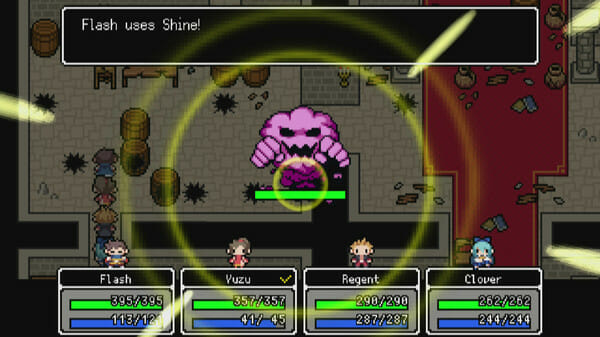
The combat is about as standard as combat can be in a JRPG. The closest comparison that I could find was to Earthbound. Even the interface looks extremely similar to Earthbound’s. Each of your party members posses different skills and attacks that can be used to try and target an enemy’s weakness. However, I found for the majority of the game, the use of these skills wasn’t particularly necessary. Most of the enemies in the game can be beaten easily by the standard attack, with a little bit of healing spells sprinkled in for safety. It almost seems as if the developers expected this to be an easy experience, and kindly offered an auto-battle option where your party will perform their attacks and spells without your input. With the lack of any necessary strategy, this was my go-to option when I wasn’t feeling bothered to just mash the attack buttons myself.

You may be asking now, what does this game have going for it without any substantial combat or JRPG elements? Well, it heavily makes up for that loss with story and character development. Every memory will task you with one required quest, and two optional ones, and these little pieces of interactions with your party and the rest of the world is what keeps me coming back. Even the most stereotypical and mundane fetch quests still felt charming. I enjoyed the world and the random NPCs so much that I found myself going into every nook and cranny to talk to anybody I could, something even the most interesting of JRPGs can’t keep me consistently doing.


In terms of aesthetic, the game captures the NES-era pixel art very well. While it clearly wasn’t going for a 1:1 representation of games from that time, the overworld looks very similar to an early Final Fantasy title. Every screen is bursting with color, and a very solid OST manages to always set the mood very well. Monster designs can range from unique to extremely typical, Possessed Wine Barrels to Wyverns, but the cutesy pixel art makes even returning monsters still stand out.

Allowing the player to explore an interesting world with an enjoyable cast of characters without the usual JRPG fluff can be very entertaining. The overall runtime of the game is a tiny fraction of what you would find in most other games in the genre, making it a nice experience that can be pretty easily completed over the course of a few days rather than a few weeks. If you’re looking for a serious and in-depth JRPG experience, you’ll want to look elsewhere. JRPG mechanics are few are far between in this game, and even the ones present have very little purpose. For someone who isn’t very versed in JRPGs, but would still like to enjoy the interesting characters and expansive worlds that they offer, The Longest Five Minutes does a fantastic job of that.

7
The Longest Five Minutes is a newcomers JRPG, without any focus on grinding or equipment. If you’re looking for a nice short story with great characters, you’ll find something to love here. But if you’re looking for a serious JRPG experience, you may want to look elsewhere.

Powered by Magic
  • VGU
  • Platforms
  • Features
  • Reviews
  • Games

© 2025 VGU.

Insert/edit link

Enter the destination URL

Or link to existing content

    No search term specified. Showing recent items. Search or use up and down arrow keys to select an item.