×
  • News
  • Reviews
  • Guides
  • Features
  • Videos
  • News
  • Reviews
  • Guides
  • Features
  • Videos
Log in / Register
REVIEW

Torment: Tides of Numenera Review

by Will Fidler, March 8th, 2017
  • Torment: Tides of Numenera
  • Reviews
  • News & Features
  • Guides
  • Torment: Tides of Numenera
  • Reviews
  • News & Features

Way back in 1999, Planescape: Torment released in the hey-day of the CRPG era. 18 years later Torment is remembered as a cult classic; an example of “games as art (TM)”. Famous for waxing philosophical and a generally bleak tone, Planescape: Torment still tops GOG’s best seller list. Cashing in on that reputation, InXile’s kickstarted pseudo-continuation – Torment: Tides of Numenera. After much anticipation from old school pen and paper RPG fans, InXile have taken a modern stab at navel-gazing ponderings about life, the universe, and stat rolls.

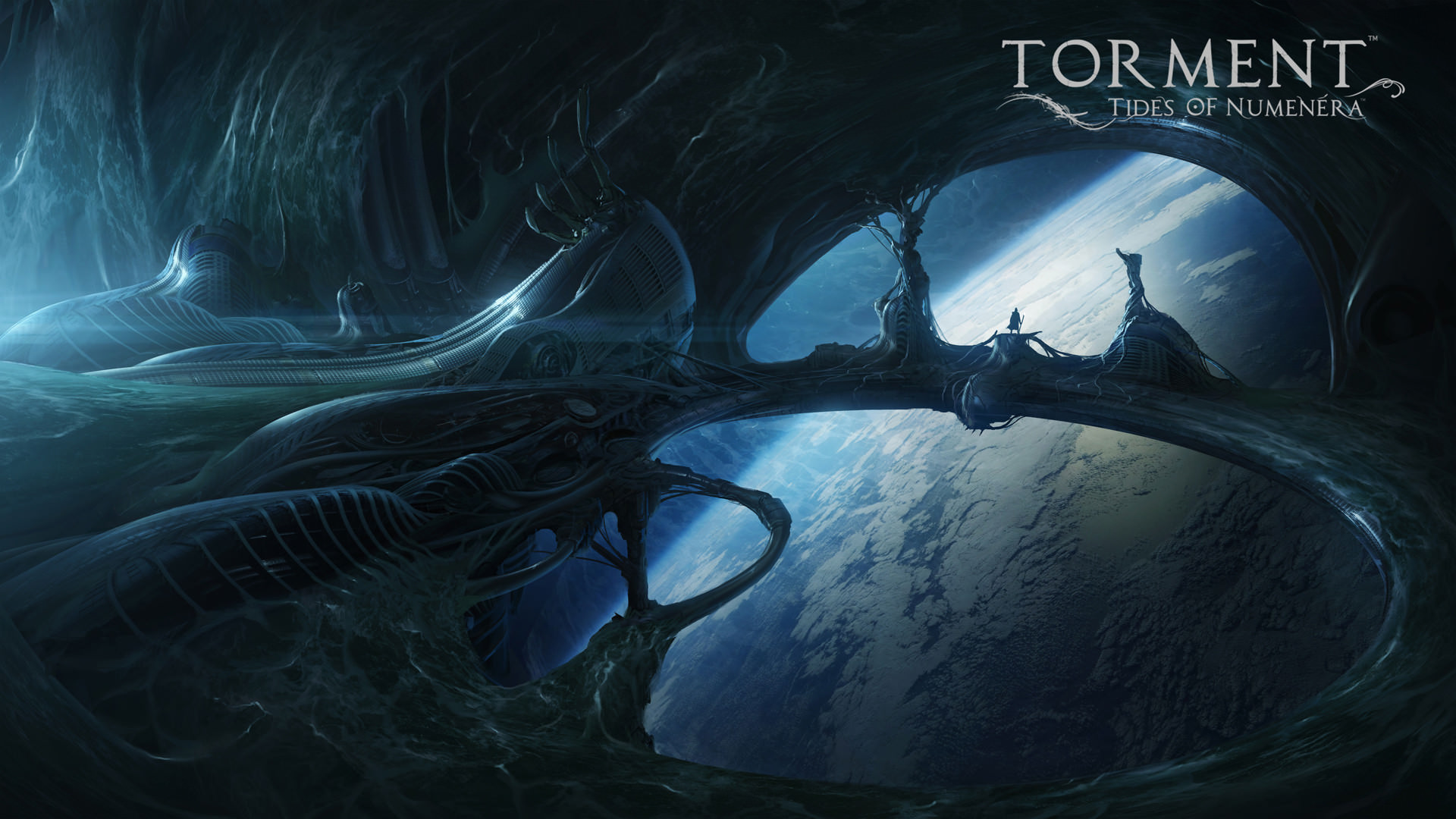
Having no experience with the D&D setting after which it takes its name from, I can say Numenera is a fascinating isometric world of garbage. A billion years from now, the Ninth World is one built on multiple millenniums worth of lost technological wonders. With no form of tech support left around, people have beaten and fiddled the collectively known Numenera until they just kinda, maybe, sort of work. It’s indistinguishable with magic. But it’s easier to accept a super-computer did it, than a wizard.

This is how Torment: Tides of Numenera justifies using the amnesiac protagonist cliche as its launching point. You’re the Last Castoff – the most recent host body for a consciousness swapping being called the Changing God. Suddenly developing your own personality while in free-fall, it all rings a little close to a certain whale in a certain Douglas Adams novel. Thankfully, unlike the whale (spoiler alert), things turn out a little better for the Last Castoff. With no memory before the impromptu skydive, you have to find the Changing God, whilst avoiding a Castoff hunting beast called The Sorrow.

As far as starting points go it works well enough, and the main arc does eventually turn into something more interesting as companions pile up. However, compared to its more recent CRPG contemporaries, Numenera is more comfortable letting the main drive come from the esoteric nature of its world. Thankfully the writing is sharp enough to keep that world engaging.
Weird Science

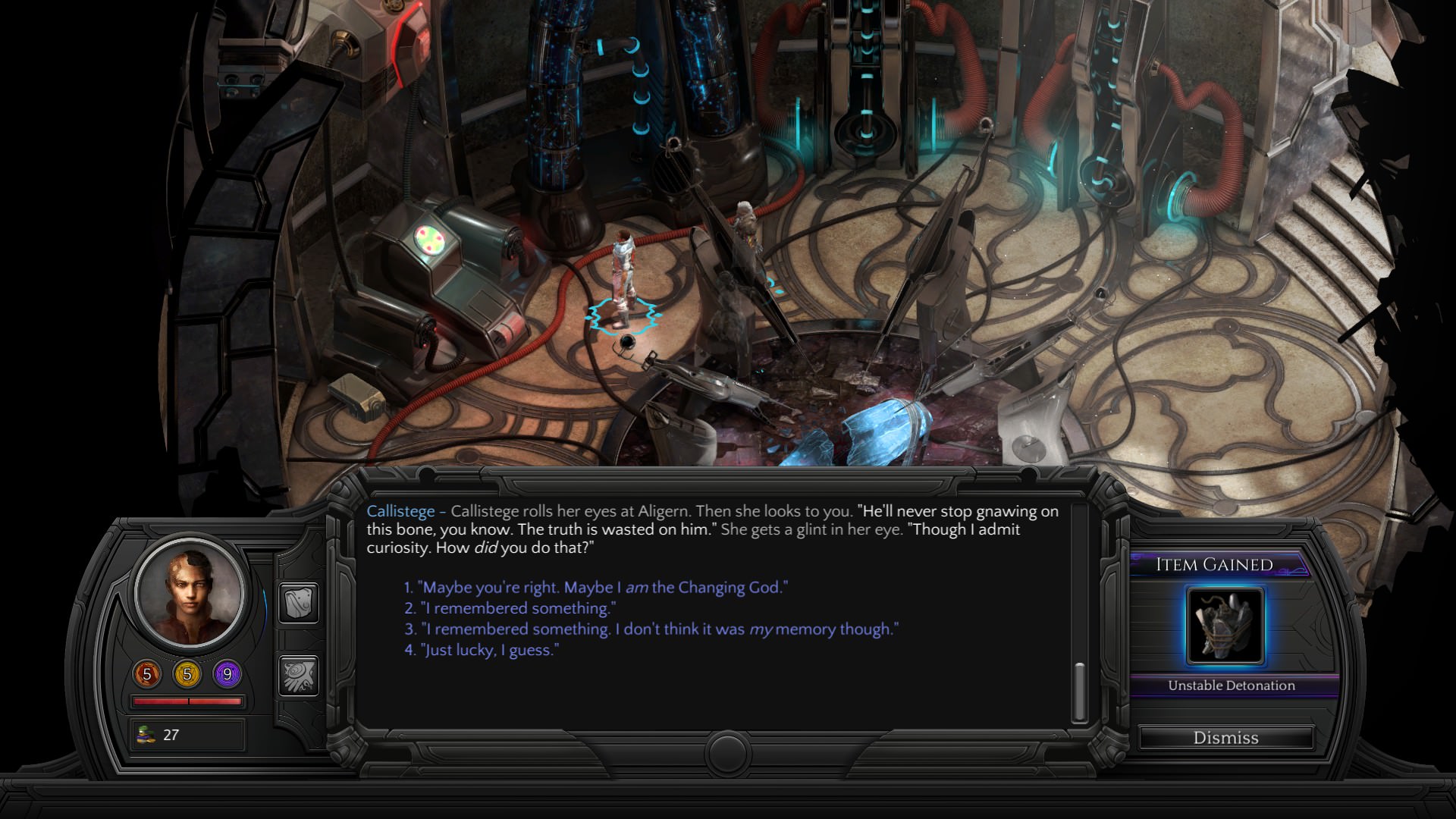
Torment: Tides of Numenera isn’t an experience for those who can’t sit down with a book. Even the simplest conversations generate reams of text, exploring every aspect of the Ninth World’s philosophy, politics, and history. The prose is so dense and purple you could easily hammer nails with it. It’s rich and textured, but perhaps a bit thick for those who need a little coaxing before crashing into a sci-fi world where extra-dimensional beasties and millennia old robots mill about willy-nilly. Progress came slow as I waded through paragraph after paragraph. Scouring a map for NPCs and treasure to can take hours, with very little input apart from dialogue choices. Torment: Tides of Numenera is largely a peaceful journey, so it lives or dies depending on the level of enjoyment you get from pouring over text.

Combat isn’t Numenera’s strong suit, or even one of its primary concerns. Most conflicts can be solved with a kind word, or resolving a small quest. When unavoidable the turn-based combat is serviceable. It isn’t something the game wants to waste a lot of time on, and that shows with how much care went into the writing, instead of the combat mechanics. By extension, this also means little time is spent sorting through loot for the best damage protection, or a new rapier. Instead, limited use cyphers and more permanent artifacts offer additional bonuses in conversation, and combat.

This is all fueled by the three stat pools – Might, Speed, and Intellect. It’s a simplified system, and one that was clearly designed to allow players to engage with the world how they want, with minimum hassle from D&D rule sets. Every opportunity to use an ability, such as persuasion or thievery, uses up these points. Spending more of a particular stat improves the chance of a favourable outcome in that roll. So if you want to intimidate a brute, Might points can be spent to raise your chances of making them wet their pants. This can be further augmented by leveling abilities to push that base percentage higher, as well as the aforementioned artefacts.

Every dialogue specialty is akin to taking a shot in XCOM. 70% chance to sway that guard? Want to pump in another point, or save it for a possible future issue, before you next rest? A loading bar tip regularly reminded me that even ‘failure’ can yield interesting moments, but it was far easier to expend all of my points for a guaranteed ‘win’, rest at an inn, to use them all again on the next run.

This commoditized approach to role-playing, albeit a more forward way of showing it, removed some of the magic of role-play. Looking behind the curtain at the man moving the levers makes my silver-tongued rogue seem much plainer when everything is reduced to dumping more points on a problem for always favourable results. I also found no shortage of limited use cyphers to regain a few points in a pinch.

An Open Book

It’s a major disappointment primarily because, as shown in the title, it wants to draw parallels between itself and its contemporaries. This is a genre where you can defeat most final bosses through philosophical debates. Where a perceptive player can overcome the majority of tasks by playing off certain characters faults and ideologies instead of stat dumps. Spurning that in favour of a hit percentage seems a little reductionist.

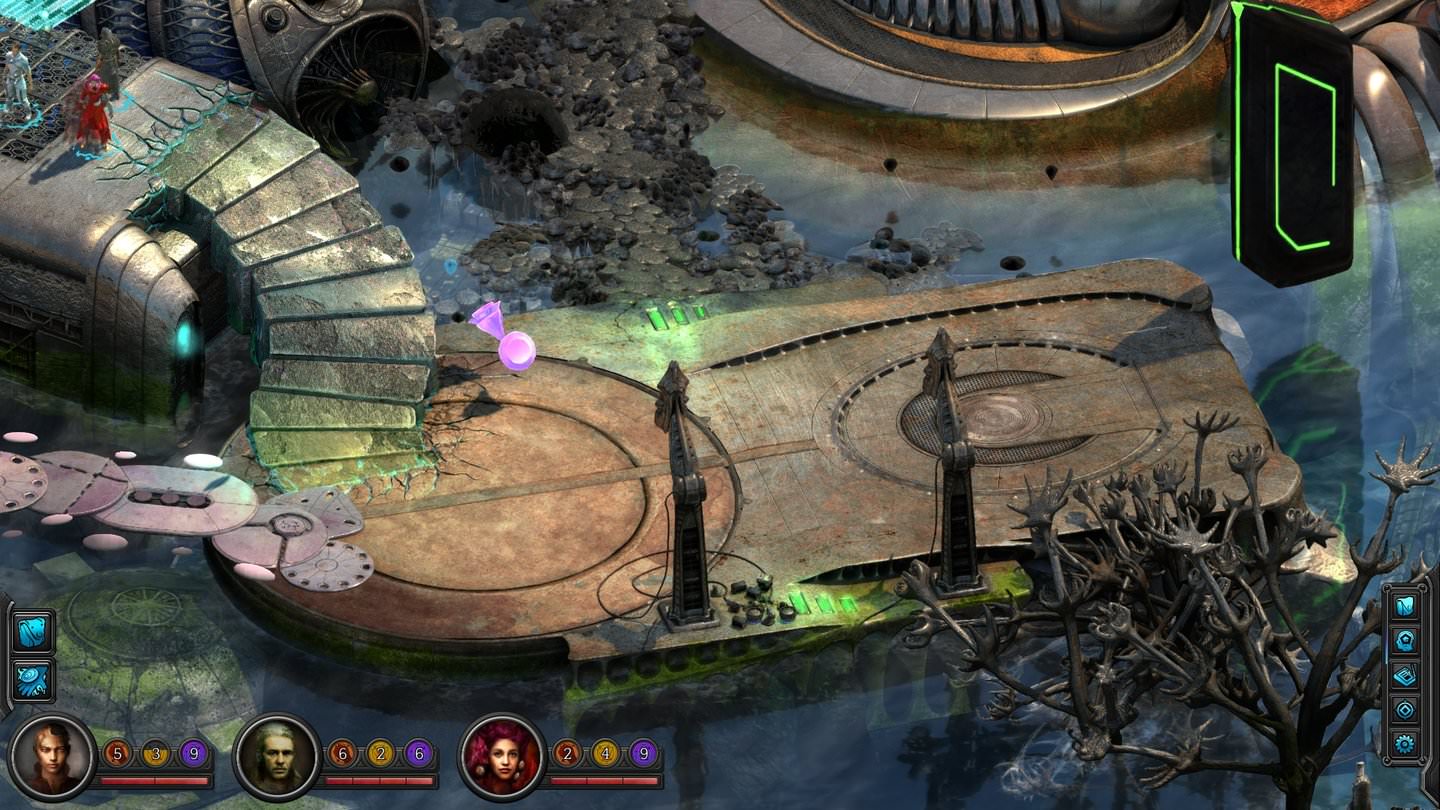
With the game engine lifted straight from Obsidian’s Pillars of Eternity, the world’s pre-rendered backgrounds look best from afar. Zooming in too close to character models give them a PS2 era feel, contrasting to the backgrounds, which spar no detail. It also forgoes a day/night cycle, making the world static and a little bare bones, albeit dressed up.

Torment: Tides of Numenera is a game meant to be prodded, and examined. It begs to be engaged with and will eat away hours of your time if you want to give them up. For that time it’ll provide multiple novels worth of reading, with far-future concepts and characters, often removed from our modern sense of morality. Unfortunately, it hobbles itself by laying all of its cards and tricks on the table, proffering to tell you exactly how the game has to win, rather than engage on a more nuanced level. It isn’t far removed from Mass Effects issue of ‘always pick the highlight red/blue’ choices.

This isn’t a complete indictment of Torment: Tides of Numenera, but if it wants to compare itself to one of the mediums best examples of mature story-telling, it InXile needed to find a more interesting way for players to engage with its prose. Thankfully, the prose which is there is captivating and brimming over with novel ideas.

While Torment: Tides of Numenera doesn’t hit the same consistent level of quality other recent revival-era CRPGs, it does enough right to make itself worth playing. Cutting away combat, and focusing on conversations, is something that could be fantastic if done right. Instead here it’s just interesting enough to string along the dozens of hours it takes to reach its conclusion.

7
A frustrating CRPG that hits the mark more often than not thanks to its writing

Filed under: CRPG inXile RPG Torment: Tides of Numenera

The Outer Worlds Gets Switch Release Date, June 5th + Day One Patch
Oninaki Review
GreedFall Gets Release Date and Trailer
A look into Warhammer Fantasy Roleplay: Starter Set
The Game Awards
5 Games That Could Be Announced At The Game Awards 2018
Labyrinth of Refrain: Coven of Dusk Review
Divinity: Original Sin II – Definitive Edition Review
Code Vein Release Date Announced, Plus Collector’s Edition Explained
ELEX Review
Powered by Magic
  • VGU
  • Platforms
  • Features
  • Reviews
  • Games

© 2025 VGU.

Insert/edit link

Enter the destination URL

Or link to existing content

    No search term specified. Showing recent items. Search or use up and down arrow keys to select an item.